A Movement Science Based Approach to Training for Fencers

What am I seeing?

The videos linked below are part of what drive us here at LungeLab. We combine our expertise and experience with science and a deeper understanding of what is really happening during fencing movements. That is why we have used Electromyography (EMG) to help us understand which muscles are most active and when they are active during fencing.

What is EMG?

It’s is a way of measuring the electrical activity produced by muscles during movement. EMG helps us see when a muscle turns on, how active it is, and when it turns off.

What is the point of these videos?

This scientific approach helps guide how we build our programs. We use our own knowledge of anatomy, muscle physiology, and training principles to better understand the demands of the sport. LungeLab programs are designed to train these muscles not just to get stronger, but to transfer to fencing performance.

Skip to Videos
  • Standing to En Garde

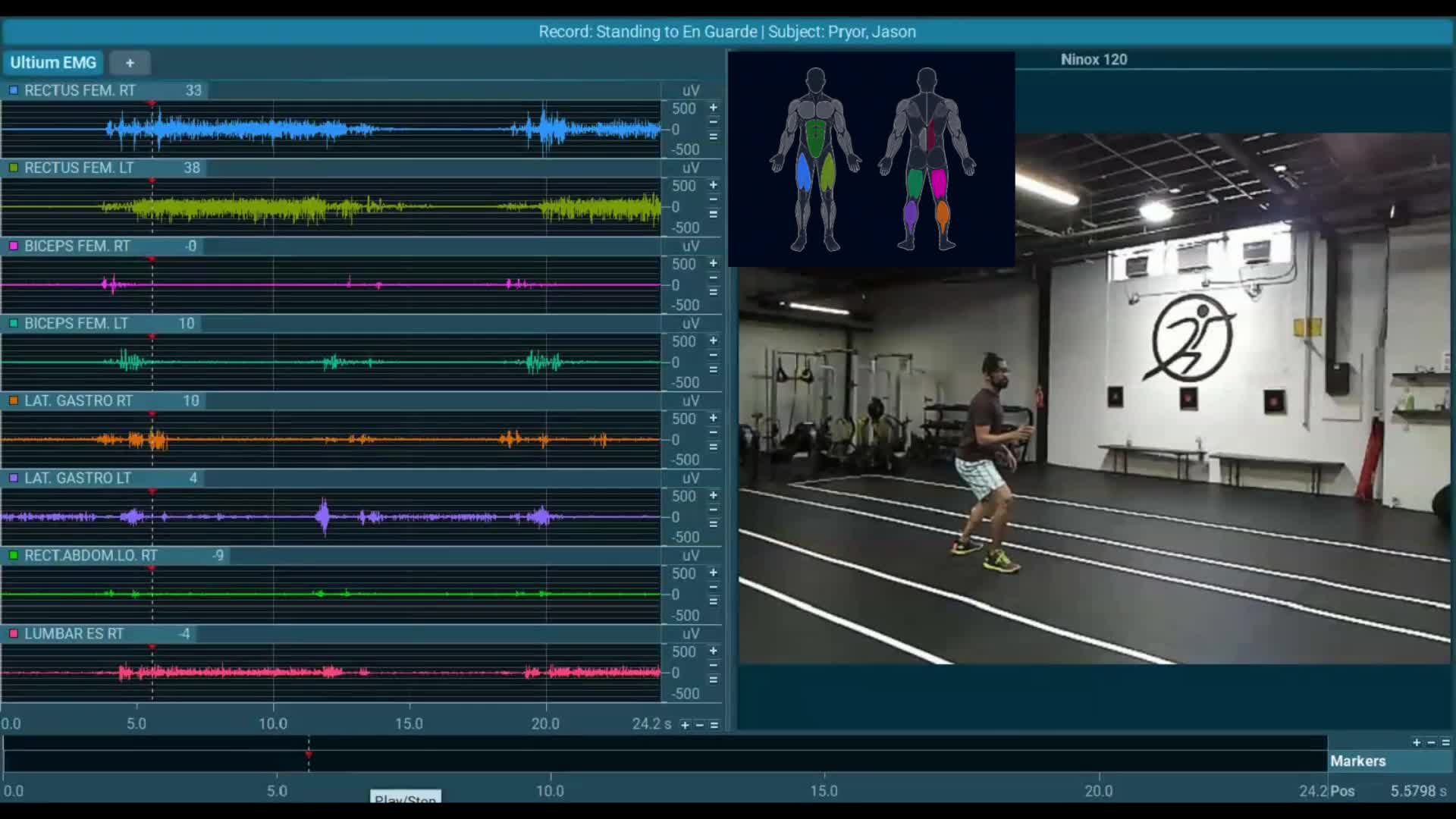
    En garde is not a passive resting position. The quadriceps remain active bilaterally at a much higher level than quiet standing, while most other muscles stay relatively quiet except for low-level lumbar extensor activity to support posture.

    This means that fencing requires substantial quadriceps endurance, which is addressed throughout all of our programs at all levels.

  • 3 Advances

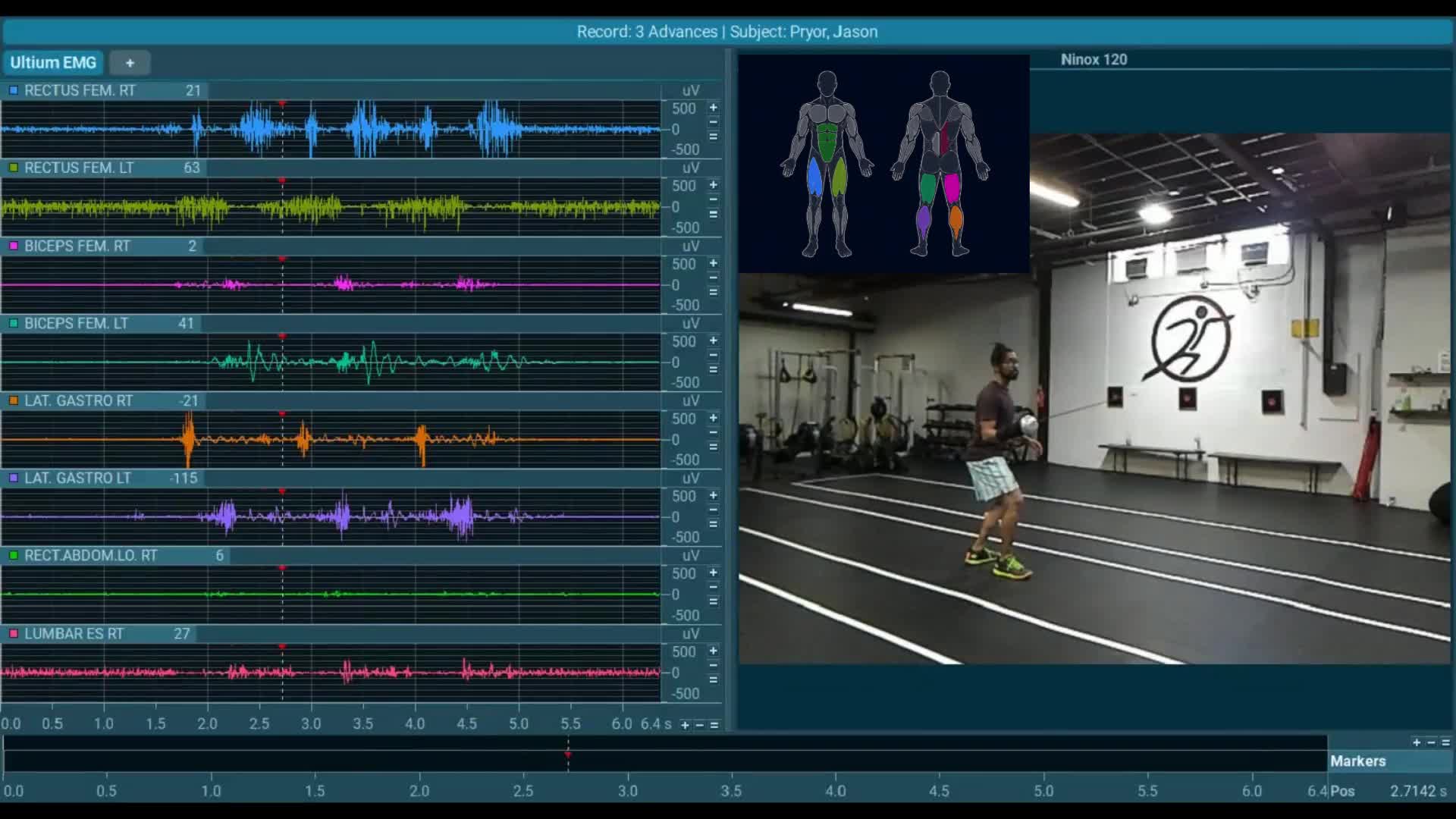
    During repeated advances, both quadriceps contribute to movement control, with the front leg helping initiate and absorb each step. The rear leg remains active for a longer duration, supporting propulsion and rhythm, while the calves assist with quick foot clearance and forward drive.

    This means that repeated advances require both sustained a quick onset/offset activity of the quadriceps and power production from the calves as well, all of which are addressed throughout our programs.

  • 3 Retreats

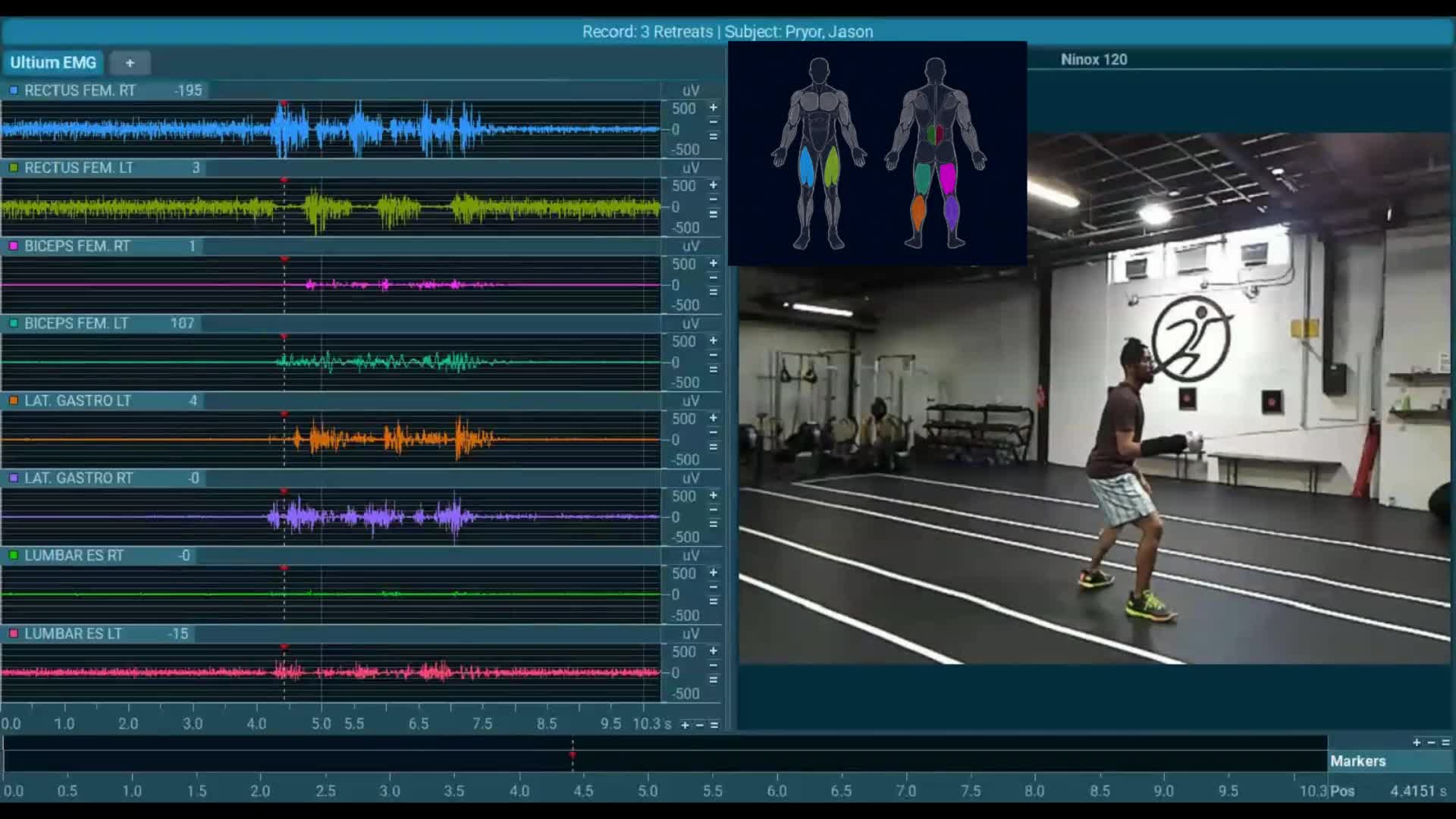
    Repeated retreats require a push-and-absorb pattern between the legs. The front quadriceps activate first to drive the retreat, followed by the rear quadriceps to receive and control the landing, with relatively minimal hamstring activity throughout.

    This means that retreats require both power and control from the quadriceps. Both are addressed throughout our programs at all levels.

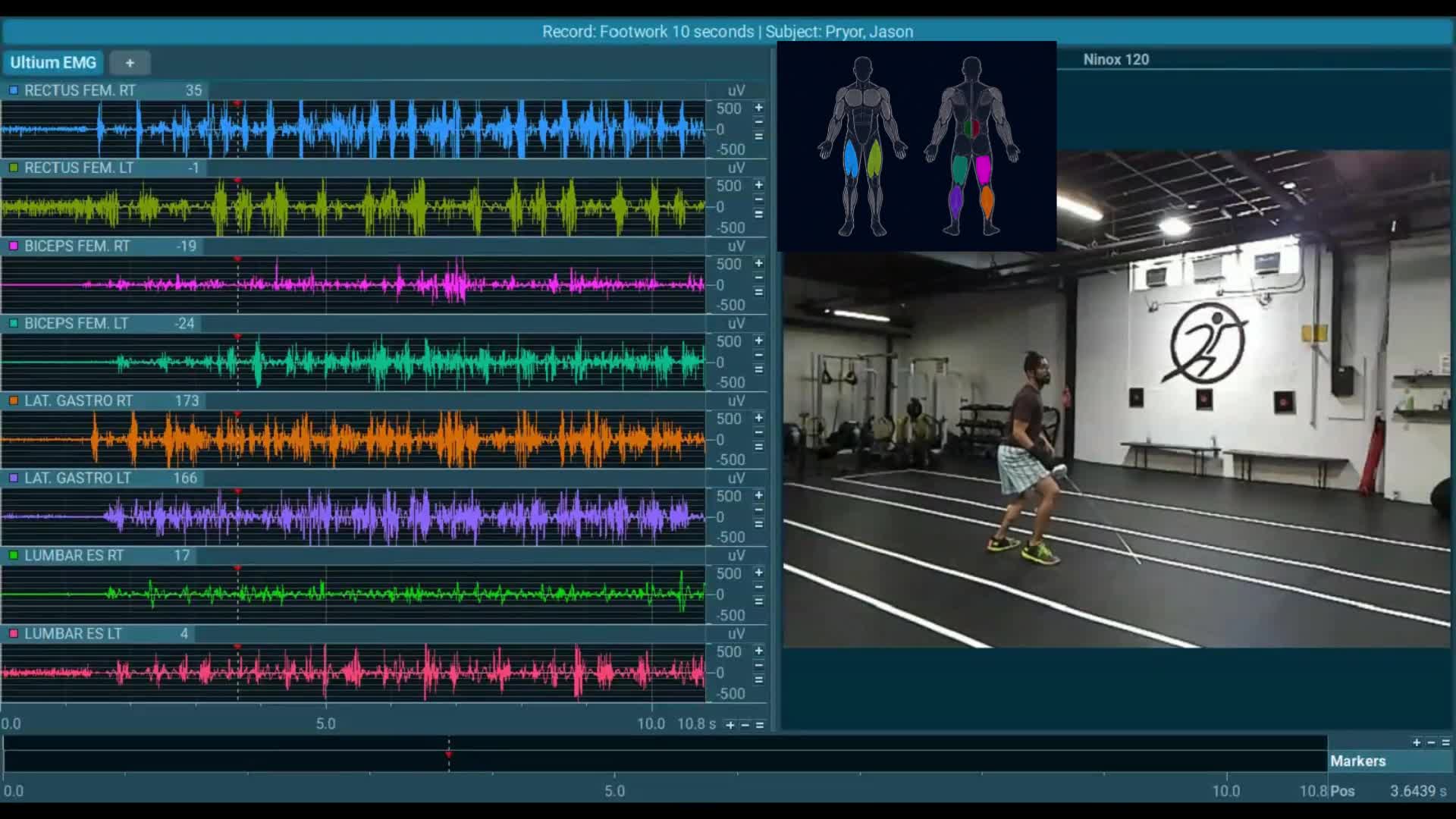
  • Continuous Footwork

    Fencing footwork is characterized by rapid bursts of activation, quick on-off muscle timing, and repeated acceleration and deceleration. The calves and quadriceps play major roles in maintaining speed, rhythm, and responsiveness. Hamstrings are active at a low level throughout with larger bursts of activity from the rear leg. Core stability is needed to maintain the trunk upright.

    Quick bursts of activity in the musculature are address throughout our programs through plyometrics and jump roping or running. Core stability is addressed throughout our programs with core specific work (including rotation and counter-rotation), hip hinge work, and compound movements.

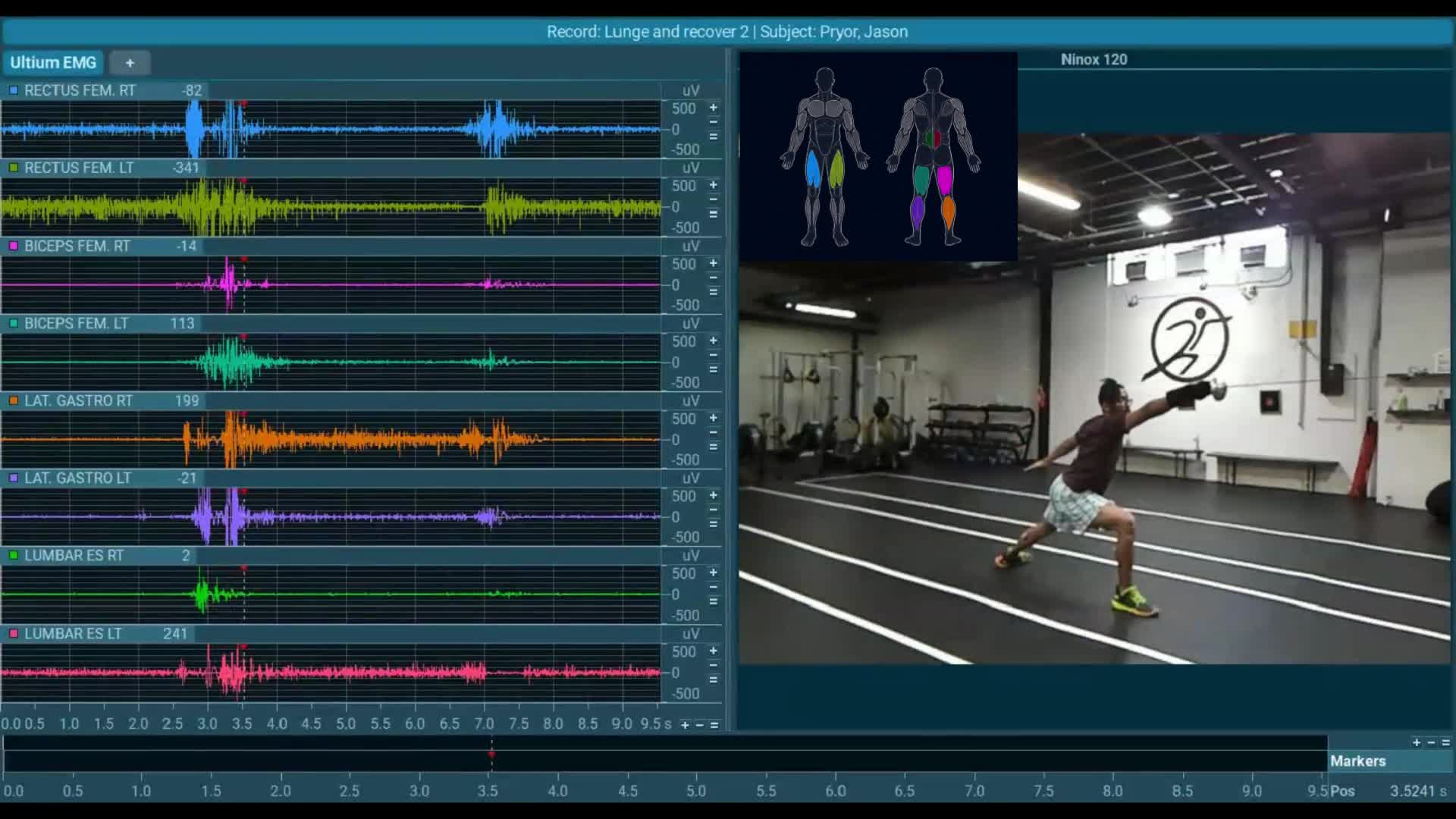
  • Lunge and Recover

    The lunge produces larger, shorter-duration bursts of muscle activity than basic footwork. Both quadriceps activate together, the rear hamstring and calf contribute to propulsion, and the front quadriceps and calf help control foot clearance, landing, and recovery.

    Our programs target these needs through compound movements, progressive overload, and plyometric training.

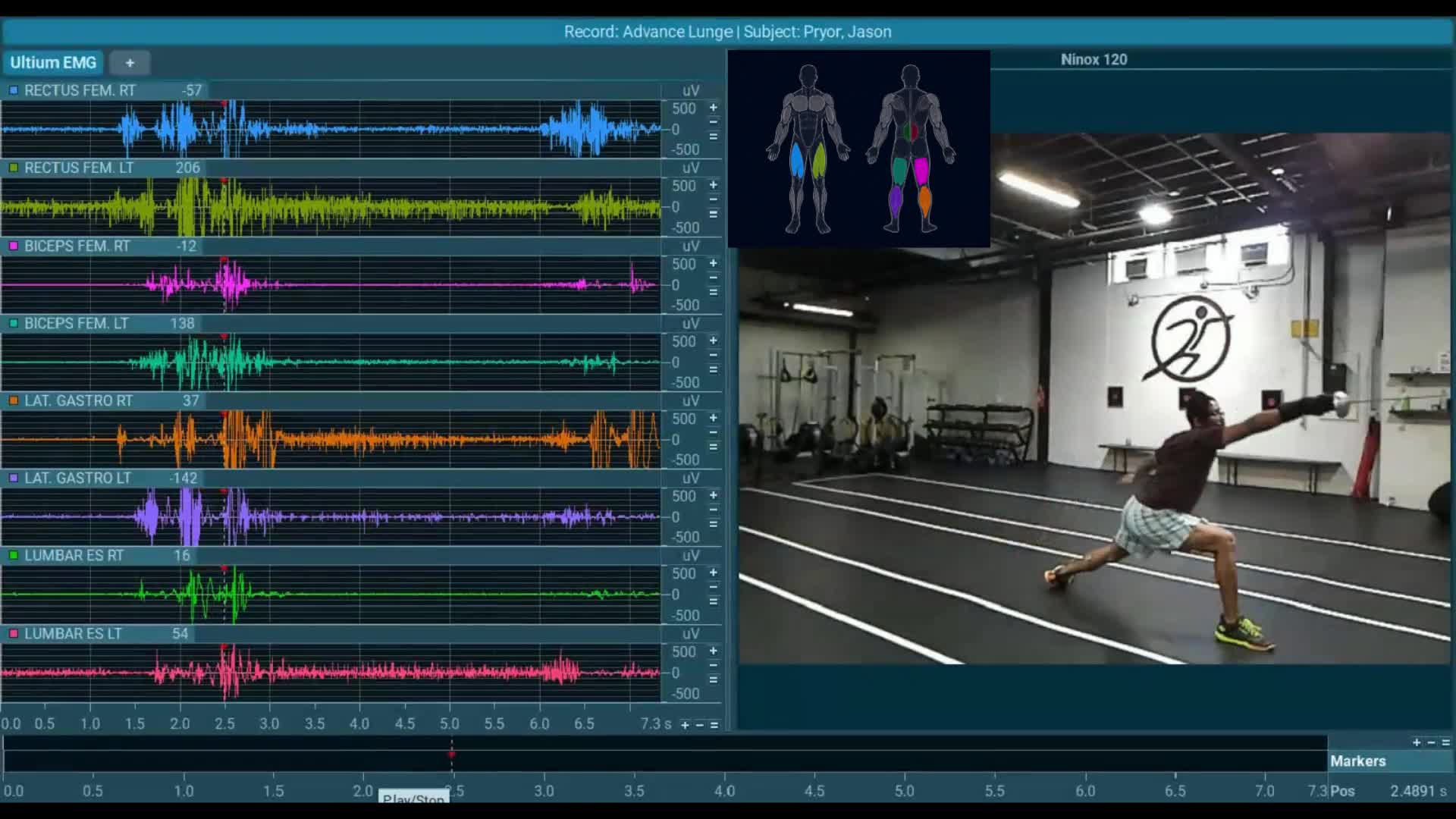
  • Advance Lunge

    The advance lunge blends rhythmic stepping with a short, explosive lunge action. The quadriceps and calves shift from repeated footwork bursts into higher-intensity propulsion and landing control, emphasizing both speed and braking ability. Both hamstrings show a higher demand with more background activity from the back leg.

    These demands are addressed by a multitude of high power, high demand lower extremity compound exercises. The ability to coordinate power from multiple groups of musculature is crucial and addressed throughout our programs, especially in the weeks approaching competition.

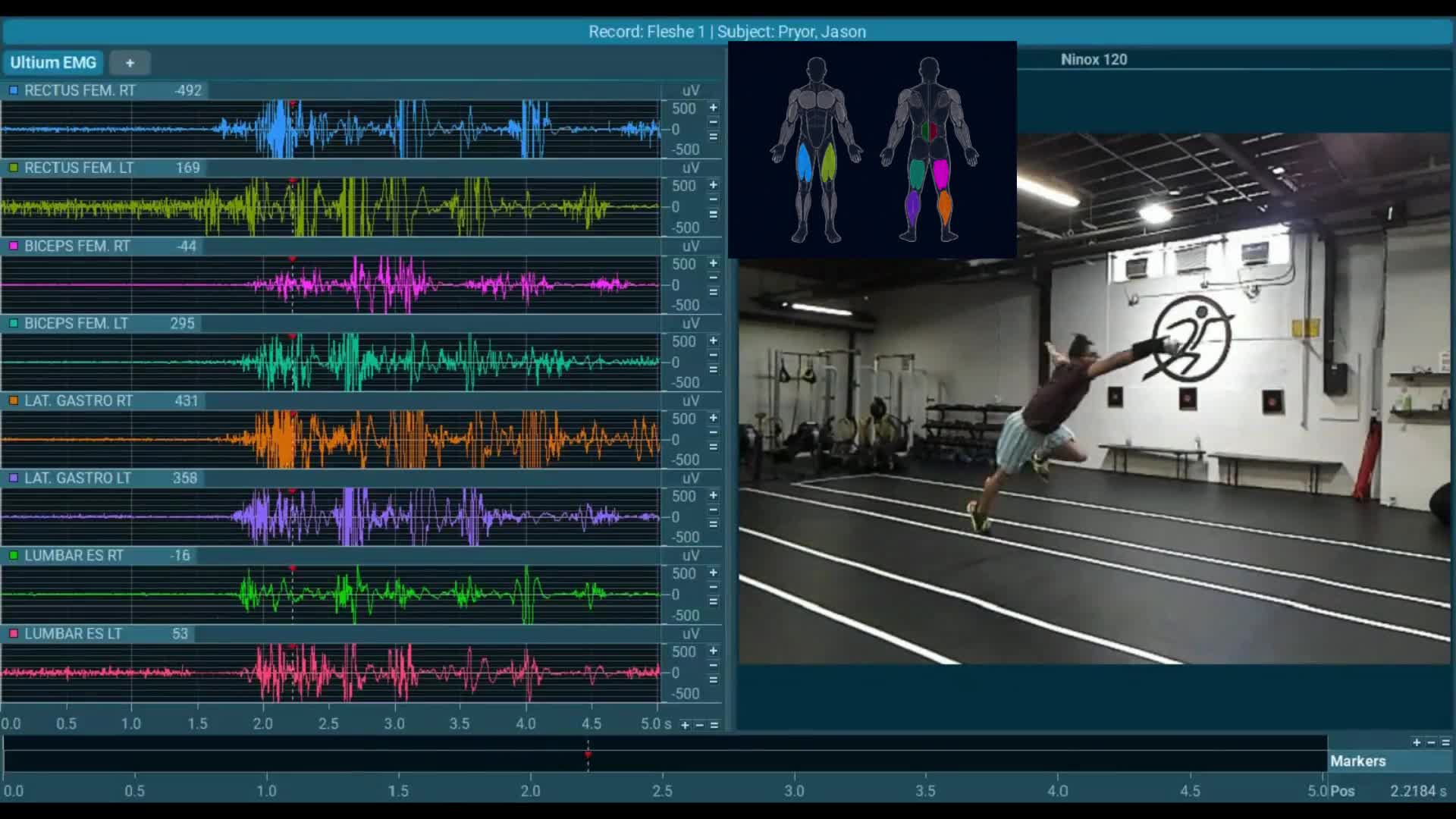
  • Fleche

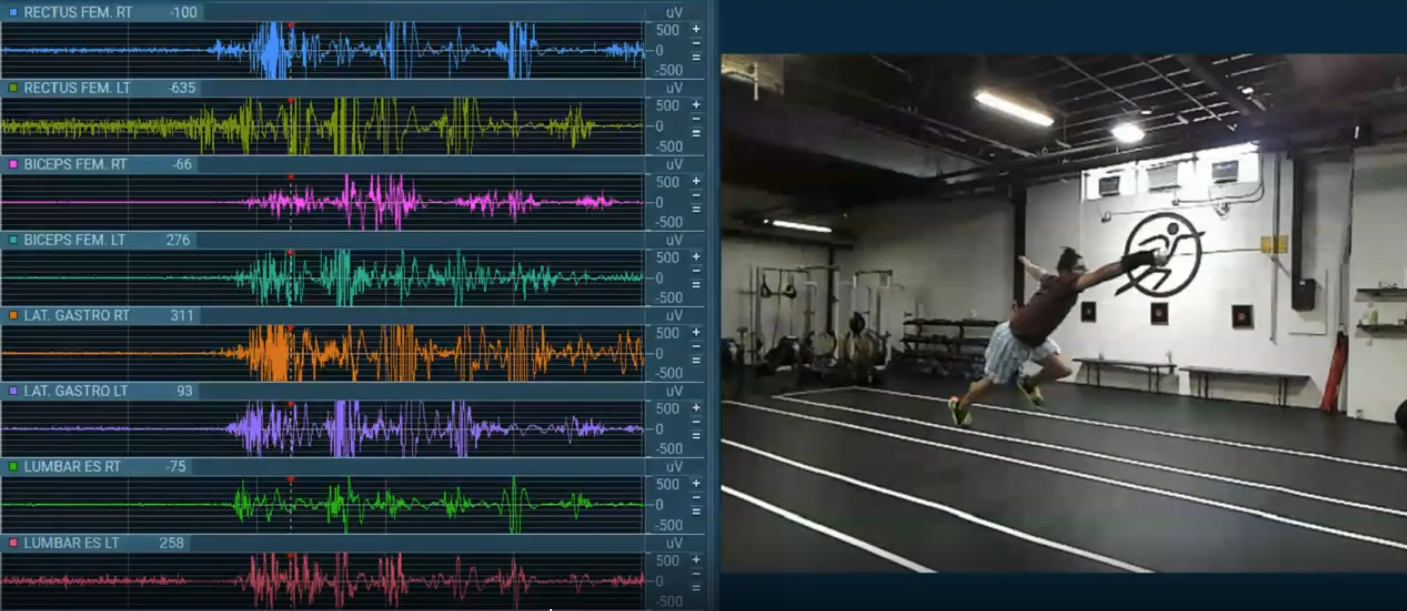
    The fleche is a brief, high-amplitude action. The rear quadriceps initiate the push, followed by a strong burst from the front quadriceps, while both calves show high activity to support rapid acceleration and explosive forward movement.

    High power, plyometric exercises are crucial to develop the ability to perform this action while maintaining core stability and avoiding injury.

  • Extension

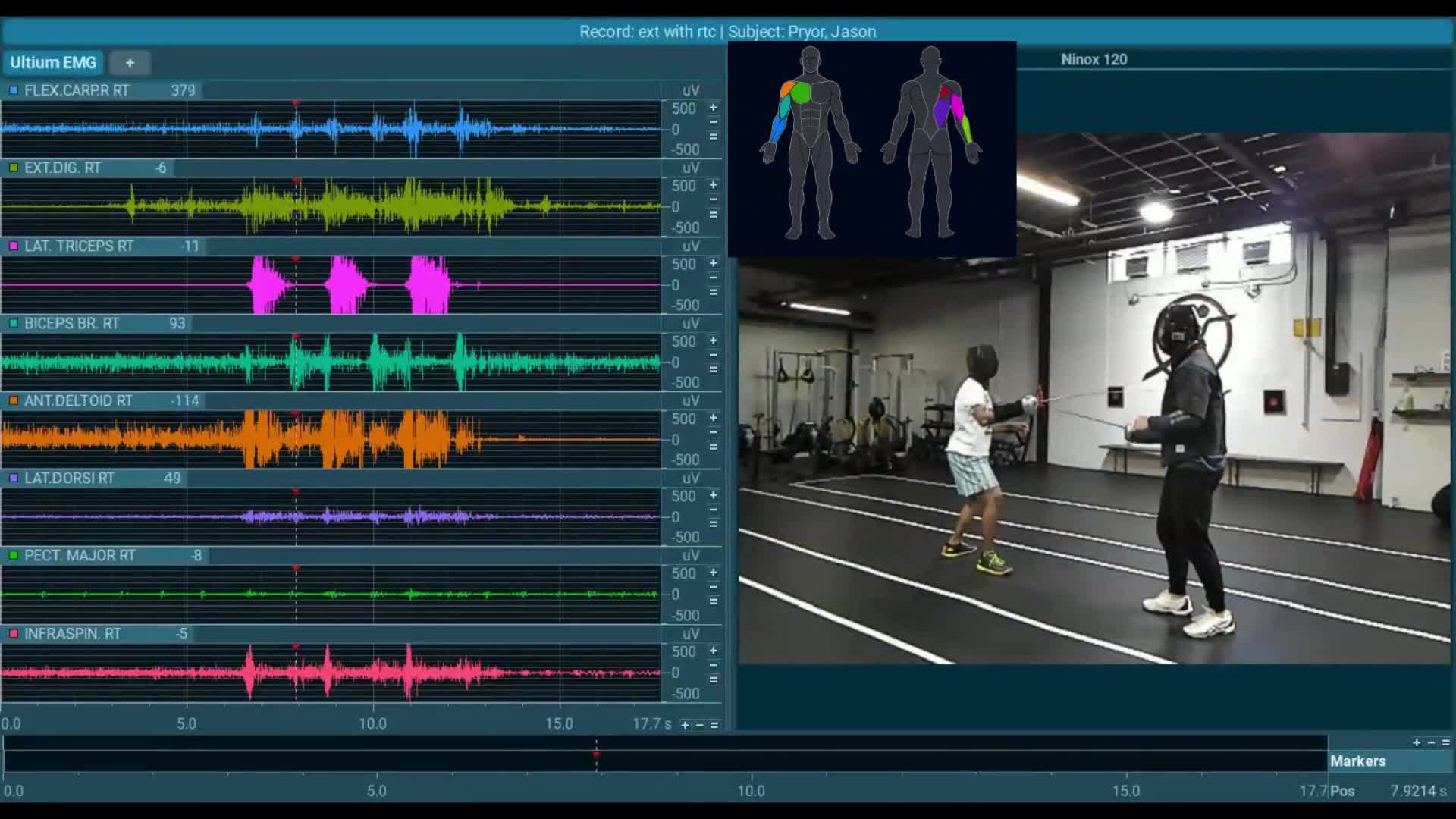
    The extension emphasizes efficient weapon-side reach while maintaining postural control. A clean, quick extension requires substantial triceps power, forearm activity (especially in the extensors) for point control, and activity in the rotator cuff to stabilize the shoulder. Shoulder strength is also needed for this movement to develop appropriate speed.

    All of these major muscle groups are targeted throughout our programs at all levels. Shoulder strength and stability is crucial both for performance and for injury mitigation.

  • Flick

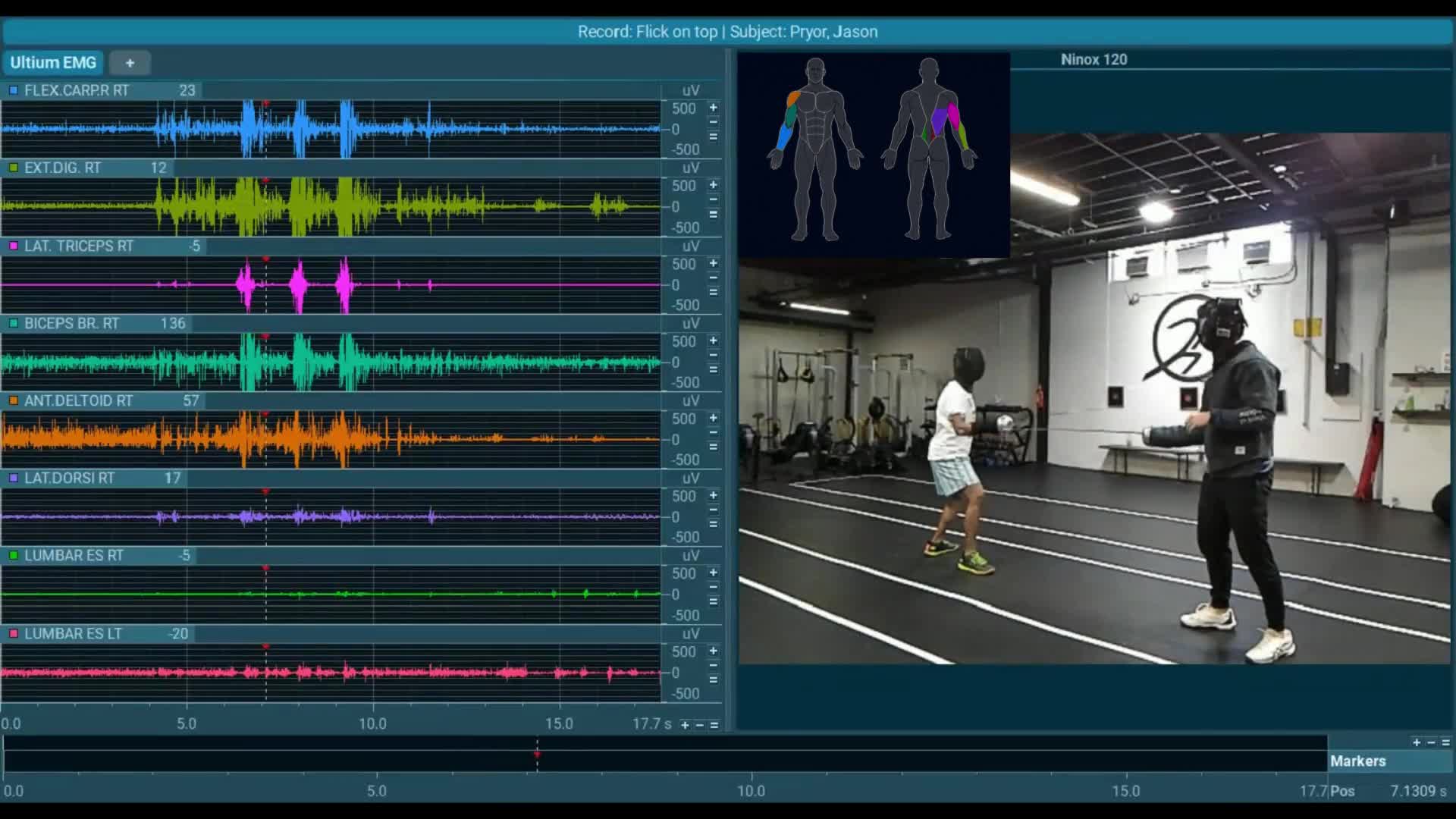
    The outside flick shows a rapid extensor-dominant cocking phase followed by quick flexor activation during the hit. The extensors remain active into recovery, with especially strong extensor activity compared with the inside flick. The shoulder and biceps are also important to assist, especially in the cocking phase, and the triceps is crucial during the actual extension phase.

    Training for all of these muscle groups is present in a variety of ways throughout all of our programs.

  • 4 Parry-Riposte

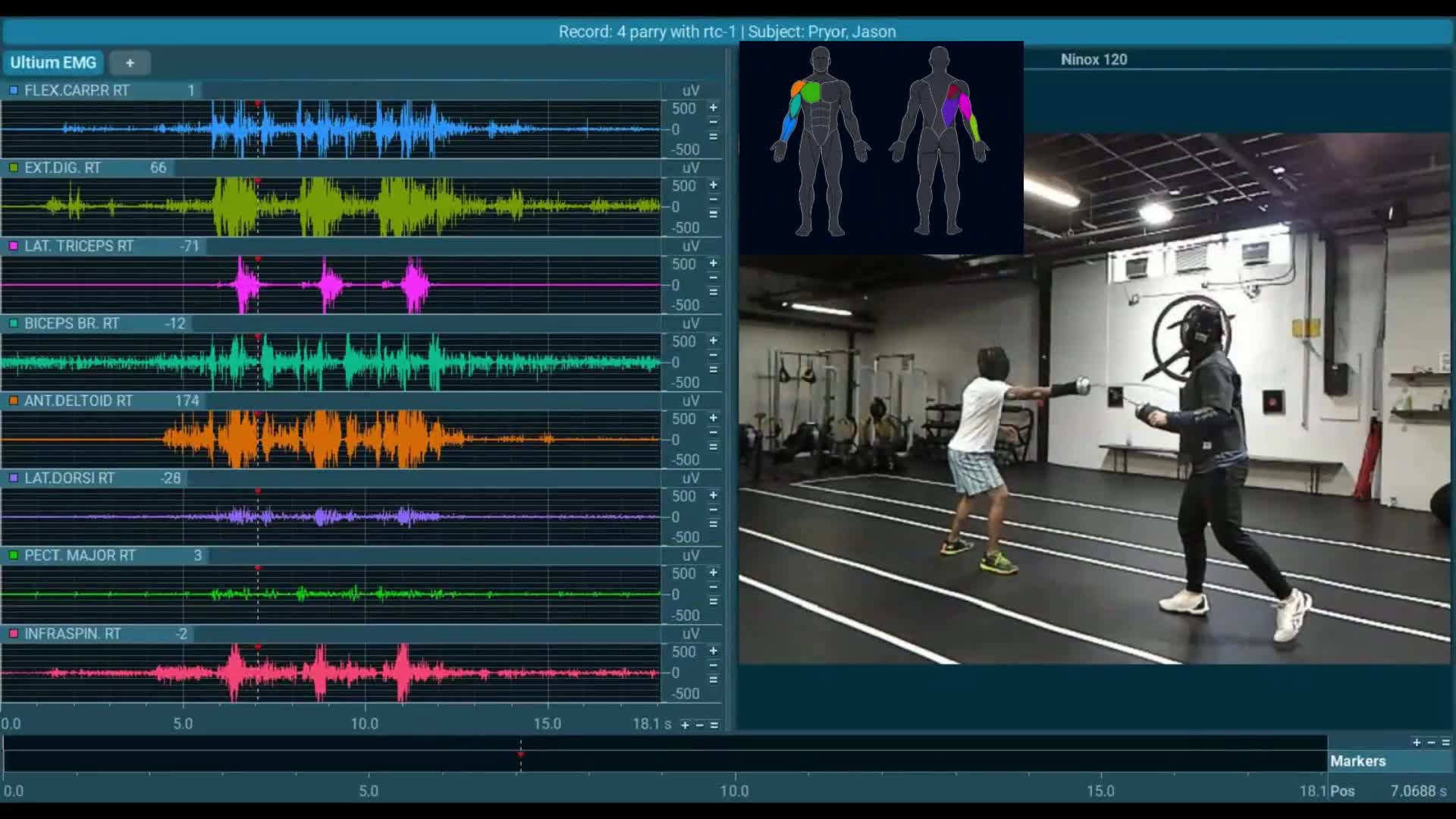
    The 4 parry-riposte shows strong forearm involvement during the parry, especially from the extensors. Biceps and infraspinatus activity contribute during the defensive phase, while the triceps and deltoid become more active during the riposte and extension.

  • 4 Opposition

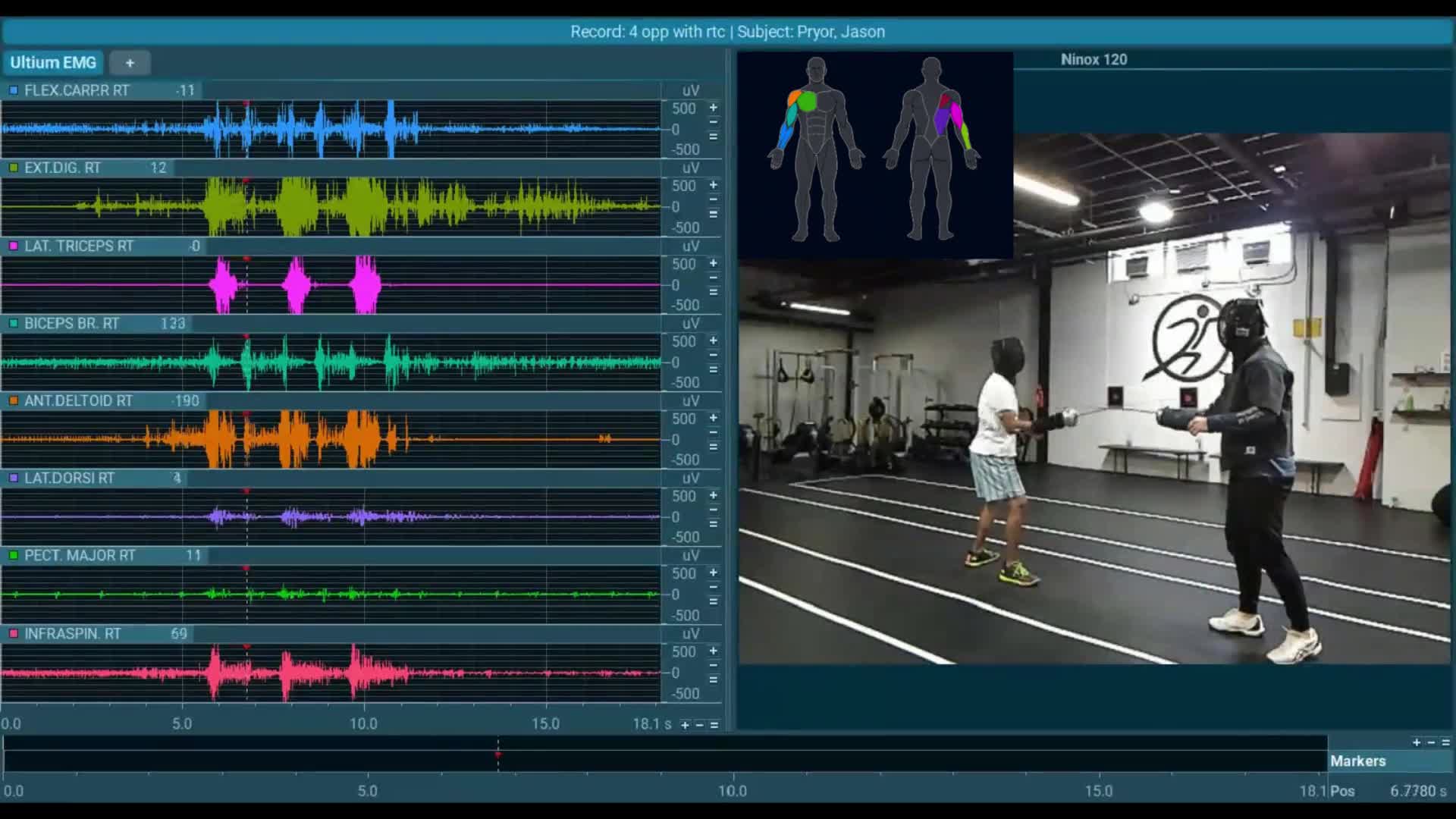
    Opposition in 4 shows fast onset of forearm activity, with both flexors and extensors contributing to blade control. The action resembles the parry-riposte pattern but occurs with faster timing and less separation, making coactivation and coordination crucial.

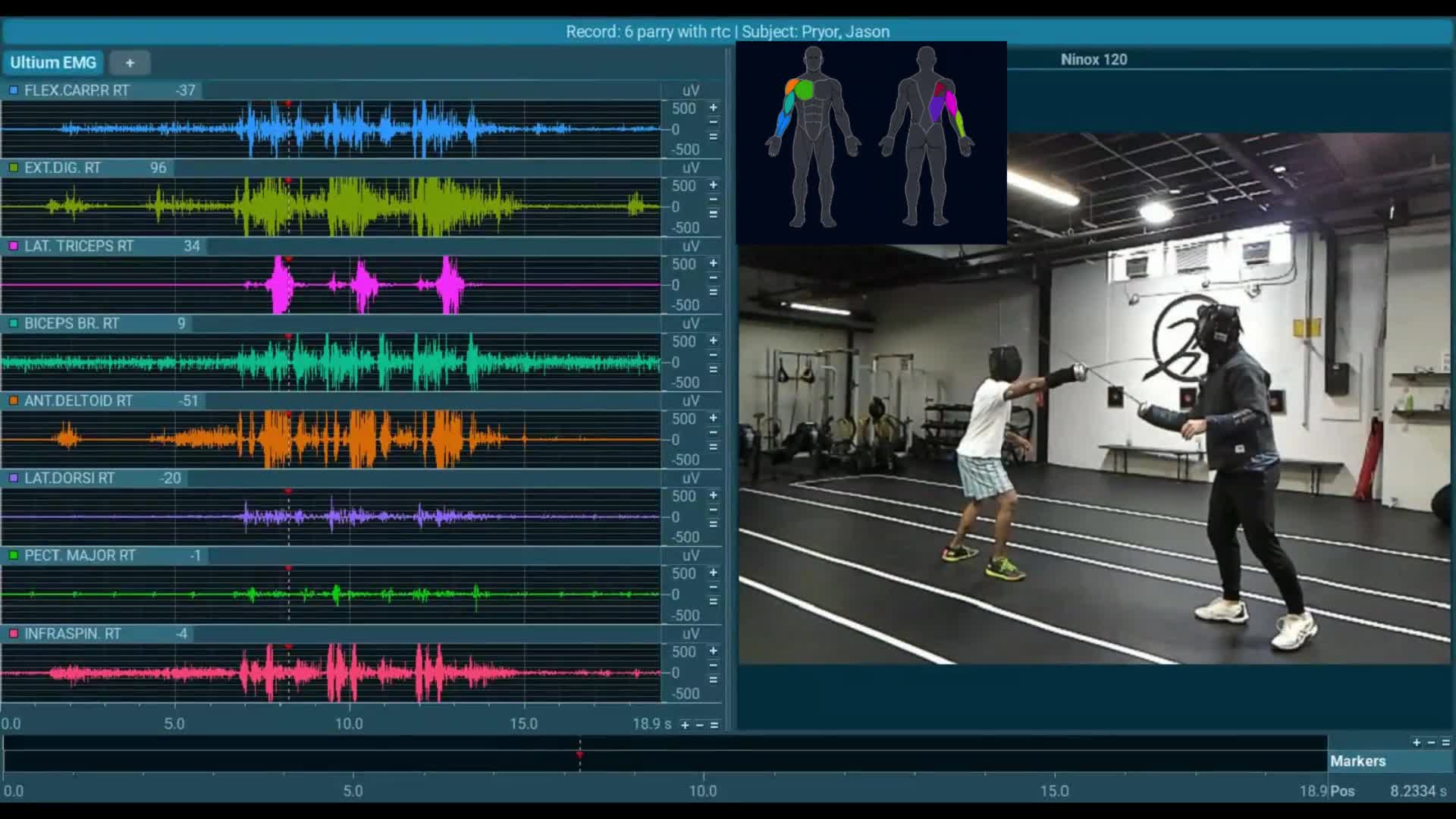
  • 6 Parry-Riposte

    The 6 parry-riposte requires coordinated forearm, arm, and shoulder activity. The forearm flexors and extensors are active during the parry, the biceps contributes during both parry and extension, and the triceps is most active during the riposte.

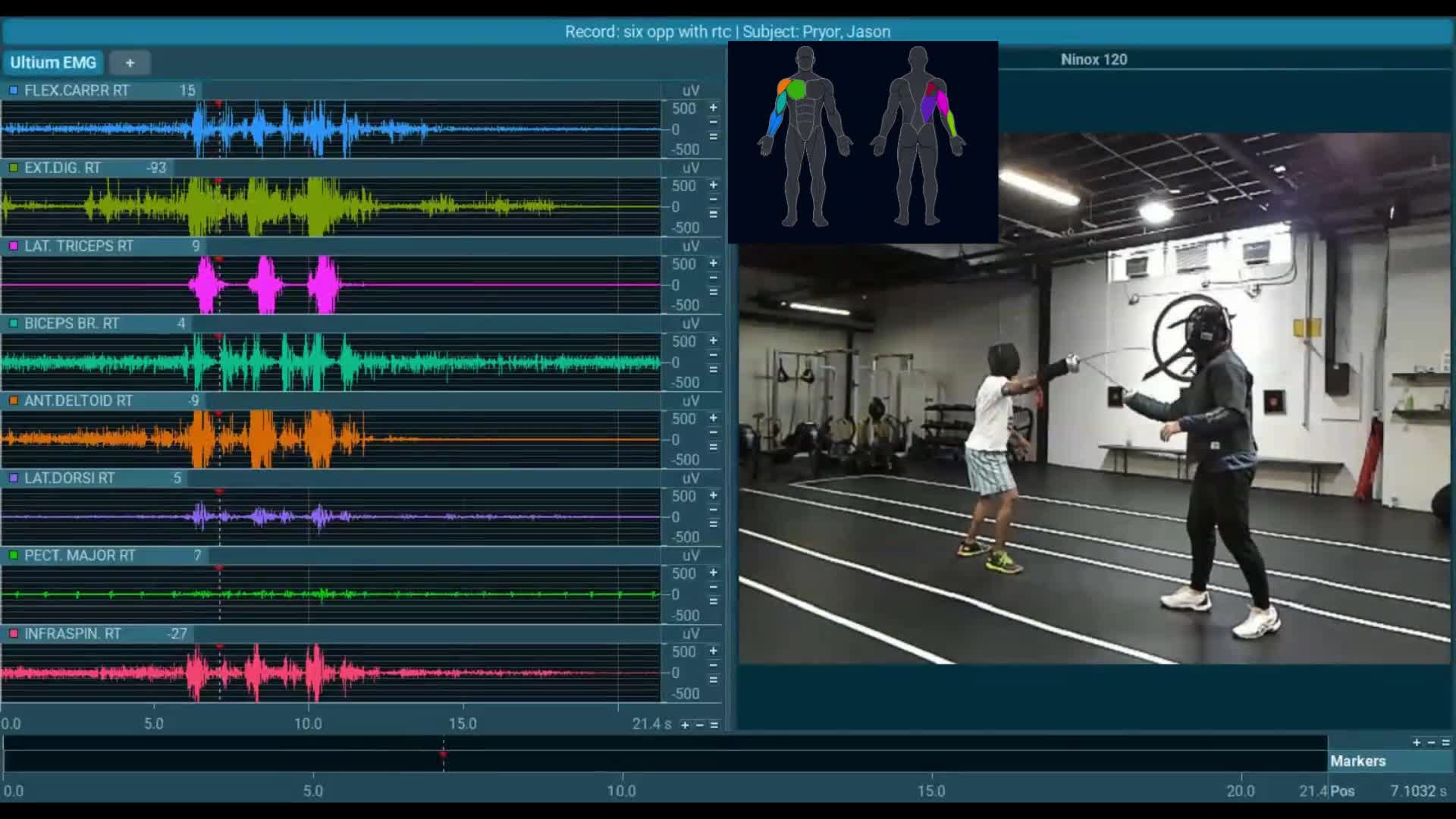
  • 6 Opposition

    Opposition in 6 uses rapid forearm activation to close the outside line while preserving offensive pressure. Flexors and extensors show a similar overall pattern to the parry-riposte, but with faster onset to support immediate control of the blade.